

From The Streets To Luxury: The Connection Between Fashion And Rappers
Hip-hop and fashion have always been connected. From the earliest days of rap culture, clothing was never just something artists wore in the background. It was part of the message, part of the identity, and often part of the performance itself. Before rap became the dominant global sound it is today, artists were already using fashion to communicate status, rebellion, creativity and belonging.
What started in New York street culture eventually became one of the most powerful forces in global fashion. Rappers influenced sneakers, sportswear, luxury brands, streetwear, jewelry, denim, tailoring and even the way people think about authenticity in clothing. Today, it is almost impossible to separate modern fashion from hip-hop culture.

The Early Roots Of Hip-Hop Style
Hip-hop was born in the 1970s in the Bronx, and its fashion language came directly from the streets. Early rap style was shaped by what people had access to, what represented their neighborhoods, and what felt powerful in public space. Tracksuits, sneakers, leather jackets, Kangol hats, Cazal glasses, gold chains and customized pieces became part of the visual identity of the culture.
This style was not created by fashion houses. It came from DJs, dancers, rappers, graffiti writers and young people building a culture from the ground up. Clothing became a way to stand out, show confidence and create a recognizable identity. Even before major brands understood hip-hop, the community already understood branding, styling and presentation.
That is one of the most important things to understand: rap did not enter fashion by asking permission. It created its own fashion codes first.

Run-D.M.C. And The Sneaker Revolution
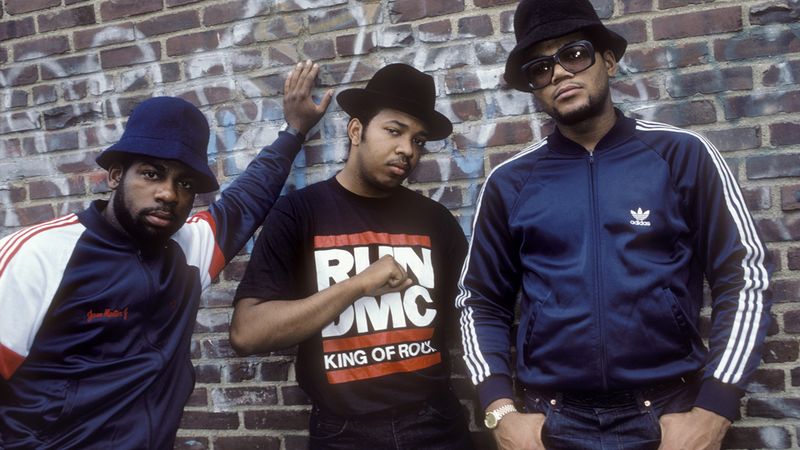
One of the earliest and most important moments in the connection between rap and fashion came through Run-D.M.C. Their Adidas tracksuits, shell-toe Superstars and no-laces styling helped turn sportswear into a cultural uniform. When they released “My Adidas” in 1986, the relationship between music and sneaker culture changed forever.
The importance of this moment goes beyond one song or one shoe. It showed that rappers could sell fashion through authenticity. Run-D.M.C. were not wearing Adidas because a stylist placed them in it. They were wearing what they already wore in real life, and that made the endorsement feel honest.
This became the blueprint for everything that followed: artists turning personal style into commercial influence.
Dapper Dan And Luxury Reimagined
If Run-D.M.C. helped define hip-hop sportswear, Dapper Dan changed how rap interacted with luxury.
Working out of Harlem in the 1980s, Dapper Dan created custom pieces using the visual language of brands like Gucci, Louis Vuitton and Fendi. His work was bold, logo-heavy and completely outside traditional luxury rules. Instead of accepting European luxury as something distant and untouchable, he remixed it for a new audience.
This was a major shift. Hip-hop did not simply consume luxury - it transformed it. Logos became louder, silhouettes became more powerful, and luxury branding became part of street-level self-expression.
Decades later, the same fashion houses that once rejected or misunderstood this culture began collaborating with the artists and designers who came from it. That reversal says everything about hip-hop’s long-term influence.

The 1990s: Baggy Denim, Jerseys And Brand Power
The 1990s were one of the most important decades for rap fashion. Regional scenes developed their own identities, and music videos brought those styles to global audiences.
Baggy jeans, oversized jerseys, Timberland boots, puffer jackets, leather coats, bandanas and sports team apparel became closely linked with hip-hop. Brands like Tommy Hilfiger, Polo Ralph Lauren, FUBU, Karl Kani, Ecko and Avirex became part of the culture because rappers and fans gave them meaning.
Some brands embraced hip-hop early. Others benefited from the culture without fully understanding it. Either way, rap made these clothes feel desirable because it connected them to attitude, lifestyle and aspiration.
For many fans, dressing like their favorite rapper was not just about copying an outfit. It was about connecting to confidence, success and identity.

The 2000s: Rappers Become Fashion Entrepreneurs
By the 2000s, rappers were no longer just influencing fashion from the outside. They were building brands themselves.
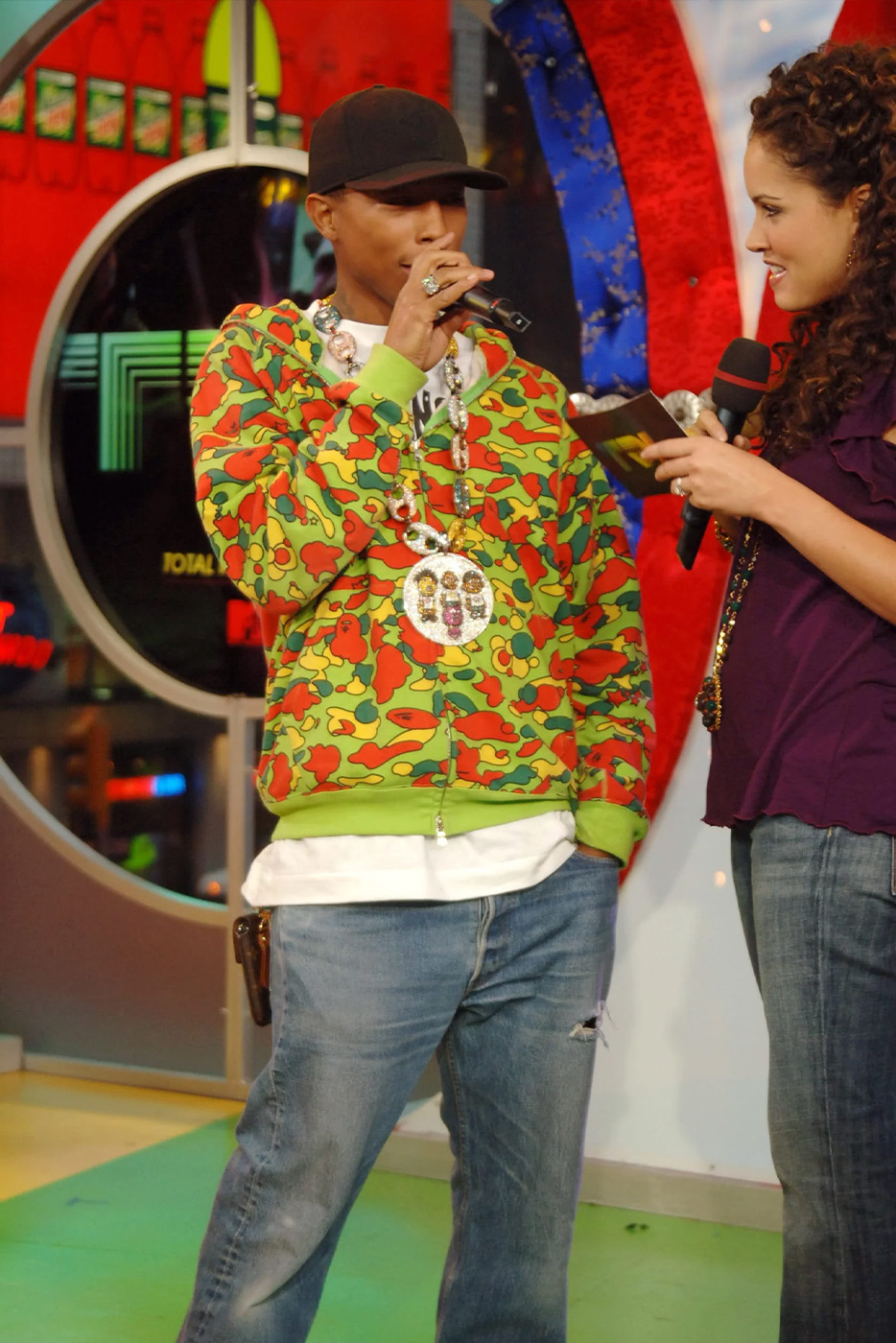
Jay-Z’s Rocawear, Diddy’s Sean John, Pharrell’s Billionaire Boys Club, Nigo’s BAPE connections, Kanye West’s early fashion work and many other projects helped turn rap style into serious business. Clothing was no longer simply merchandise. It became a lifestyle extension of the artist.
This era also pushed the idea that rappers could be tastemakers beyond music. Pharrell introduced a more playful, colorful and Japanese streetwear-influenced approach. Kanye helped bring high fashion references into mainstream rap conversations. Lil Wayne, Dipset and others made oversized, luxury-heavy, colorful styling feel larger than life.
The relationship between rap and fashion became more layered. It was no longer just about what artists wore. It was about what worlds they could build.
High Fashion Finally Catches Up
For a long time, luxury fashion borrowed from hip-hop without fully giving it respect. That changed gradually as rappers became impossible to ignore.
Kanye West wearing Margiela masks, A$AP Rocky referencing Raf Simons and Rick Owens, Travis Scott collaborating with Dior and Nike, and Pharrell becoming Louis Vuitton’s Men’s Creative Director all show how deeply rap has entered luxury fashion.
This shift is important because it represents a change in power. Rappers are no longer only customers or ambassadors. They are collaborators, creative directors, brand founders and cultural strategists.
Luxury brands now understand that rappers bring something traditional fashion often struggles to create: relevance.

Archive Fashion And Rap Culture
One of the most interesting modern links between rappers and fashion is archive clothing.
Artists like Kanye West, A$AP Rocky, Playboi Carti, Lil Uzi Vert and others helped introduce younger audiences to designers such as Raf Simons, Helmut Lang, Rick Owens, Number (N)ine, Hysteric Glamour, Jean Paul Gaultier and Maison Margiela.
This changed the way fans approached fashion. Instead of only chasing new releases, people began hunting older collections, rare runway pieces and forgotten garments. A rapper wearing an archive piece could instantly revive interest in a designer or specific season.
In many ways, rap helped make fashion research feel cool. Knowing the year, collection and cultural context of a garment became part of the flex.

Jewelry, Status And The Visual Language Of Success
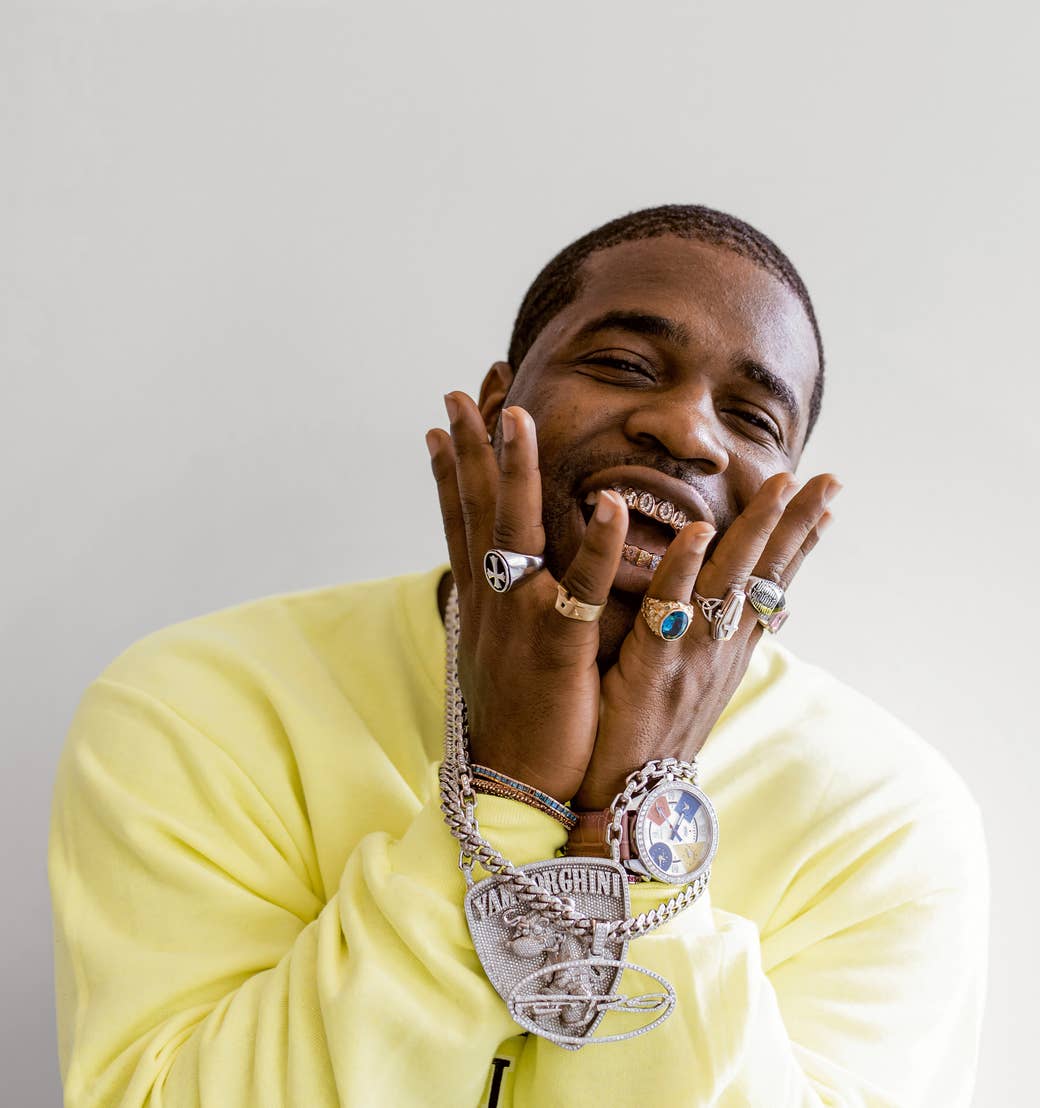
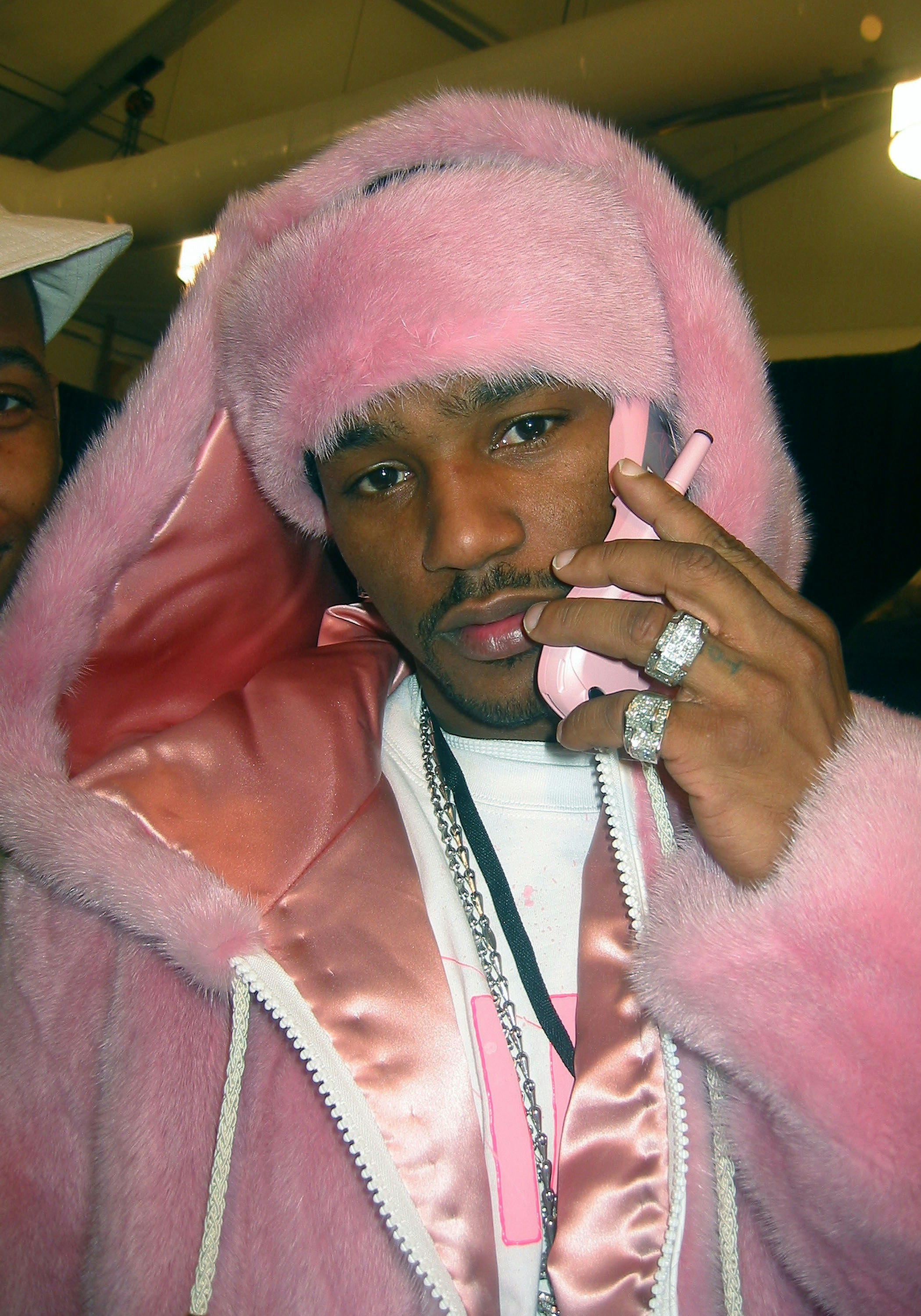
Jewelry has always been central to rap fashion. Gold chains, watches, rings, grills and custom pendants are not just accessories. They are symbols of achievement, survival and self-made success.
In hip-hop, luxury often represents overcoming limitations. Wearing diamonds, designer clothes or rare sneakers can be read as excess, but it also carries a deeper meaning within the culture. It says that someone came from somewhere and made it far enough to display the result.
This is why rap fashion is often louder than traditional luxury. It is not built around quiet wealth. It is built around visibility.
Modern Rap Fashion: Individuality Over Uniforms
Today, rap fashion is more diverse than ever. There is no single uniform.
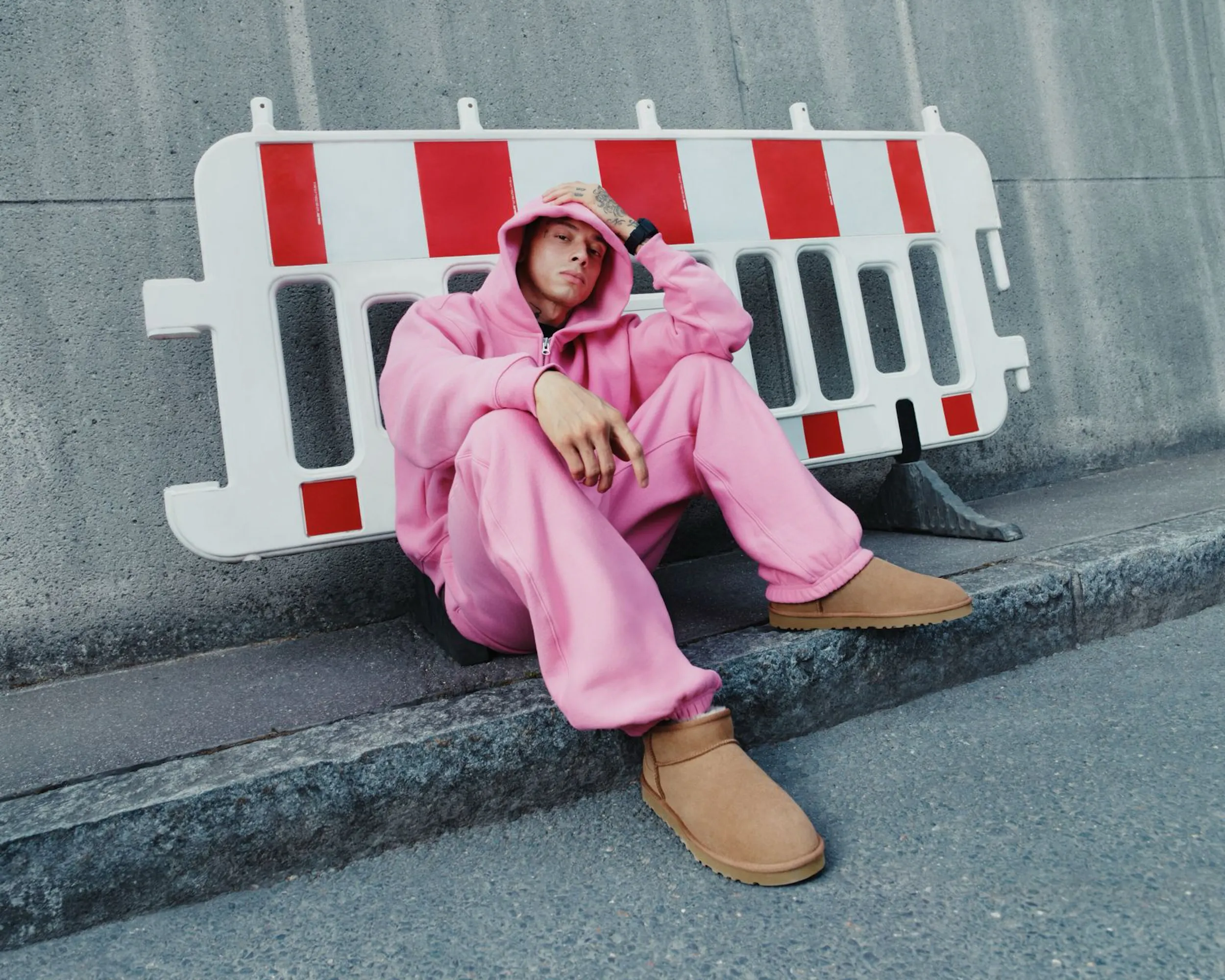
Some artists lean into luxury tailoring. Others prefer punk, opium-inspired looks, oversized streetwear, archive designer pieces, Western wear, sportswear, techwear or gender-fluid styling. The scene is fragmented, but that is exactly what makes it interesting.
A$AP Rocky might wear runway pieces and pearls. Playboi Carti may lean into dark avant-garde styling. Tyler, The Creator builds a world around preppy colors and Golf le Fleur. Travis Scott mixes workwear, sneakers and luxury. Central Cee brings UK streetwear into global focus. Each artist uses fashion to build a visual identity that supports the music.
The modern rapper is not only judged by sound. Image matters just as much.
Why Rappers Influence Fashion So Strongly
Rappers influence fashion because they make clothing feel alive. A runway look can feel distant until an artist wears it in a real cultural context. Once it appears in a music video, album rollout, airport fit, paparazzi shot or concert performance, it becomes part of a story.
Rap also moves faster than traditional fashion. Artists can introduce a brand, silhouette or aesthetic to millions of people overnight. They do not need a full campaign. One outfit can shift demand.
Most importantly, fans trust rappers because style often feels connected to personality. When the right artist wears the right piece, it feels natural rather than forced.
That authenticity is why rap remains one of fashion’s most powerful engines.
Final Thoughts
The connection between fashion and rappers is not a trend. It is one of the defining relationships in modern style.
Hip-hop took clothing from the streets to the runway, from local identity to global luxury, and from personal expression to billion-dollar business. Rappers changed how people wear sneakers, how brands use logos, how luxury communicates with youth culture, and how archive fashion is understood.
Fashion gave rappers a visual language.
Rappers gave fashion cultural power.
Explore the Listings 🟢
Shop clothing, accessories, collectibles & footwear now at unico13.
